Types of upbringing: 7 areas for children aged 6–10
What upbringing is and its main types: mental, moral, physical, aesthetic, environmental, sensory and work education, with simple activities for home.
The DonoLand team · · 4 min read

Upbringing is the everyday process through which a child gains knowledge, manners, healthy habits and curiosity about the world. Educators usually split it into several types: mental, moral (emotional), physical, aesthetic, environmental, sensory and work education. Below is what each one means at ages 6–10 and how to practise it at home.
1. Mental education
Mental education teaches a child to think, compare and draw conclusions. At this age it grows fast alongside school, but a lot can happen at home too.
- Give one short logic task a day and ask, “How did you work it out?”
- Read together and ask them to guess how the story ends.
- At the shop, let your child compare prices or count the change.
2. Moral and emotional education
Moral education is honesty, kindness and respect for others. Emotional education helps a child recognise their feelings and handle them. At this age children learn rules less from words than from how adults behave.
- Talk through the day: “What would you have done in their place?”
- Name feelings: “You look upset. Is that right?”
- Show them how to admit a mistake and apologise by doing it yourself.
3. Physical education
Physical education covers movement, good sleep and eating habits. The World Health Organization recommends at least 60 minutes a day, on average, of moderate-to-vigorous activity for children aged 5–17.
- Make morning exercise a family habit: 5–10 minutes is enough.
- Set up active games outside: skipping rope, ball games, tug of war.
- Swap screen time for movement: a short break after every half hour of play.
4. Aesthetic education
Aesthetic education teaches a child to notice and make beautiful things: music, drawing, nature, well-chosen words. It builds taste and creativity.
- Hold a small “exhibition” at home: hang your child's drawings on the wall.
- Once a week, listen to music together and talk about its mood.
- On walks, play a game of spotting colours and shapes.
5. Environmental education
Environmental education is care for nature. At 6–10 it starts with small, regular jobs.
- Give your child one house plant to look after.
- Learn to sort rubbish together: paper, plastic, food waste.
- Turn saving water and power into a game: who remembers to switch off the light?
6. Sensory education
Sensory education is getting to know the world through the senses: sight, hearing, touch, smell and taste. It matters most in early childhood, but at 6–10 it still sharpens attention and observation.
- “Mystery bag” game: with eyes closed, the child identifies an object by touch.
- In the kitchen, hold a contest to name spices by their smell.
- Open a window and count together how many different sounds you hear in a minute.
7. Work education
Work education builds independence and responsibility. When a child helps at home, they feel like a needed member of the family.
- Give a regular, age-appropriate job: laying the table, sorting laundry, tidying toys.
- Praise the effort, not only the result: “You did all of it yourself today.”
- Do small projects together: bake a pie, plant a flower, build a bird feeder.
Methods of upbringing: what works
- Lead by example: children copy what you do more than what you say.
- Daily routine: steady times for sleep, meals and homework give a child calm.
- Ask questions: instead of giving the answer, ask “What do you think?”
- Praise the method: not “you're clever” but “you checked it twice, well done”.
- Play together: play is a child's most natural way to learn.
Uzbek proverbs about upbringing
Folk proverbs put the core ideas of upbringing in a few words. Talking through their meaning with your child is part of upbringing too.
- “A bird does what it saw in the nest”: children repeat what they see at home.
- “Learning is like digging a well with a needle”: knowledge comes with patience and steady work.
- “Rest lies at the bottom of work”: today's effort brings tomorrow's result.
- “A kind word is food for the soul”: warm words give a child strength.
- “Learning brings happiness, knowledge brings a throne”: learning opens the way to the future.
Don't start everything at once. This week pick one type, say work education, and give one small job each day. Next week, add another.
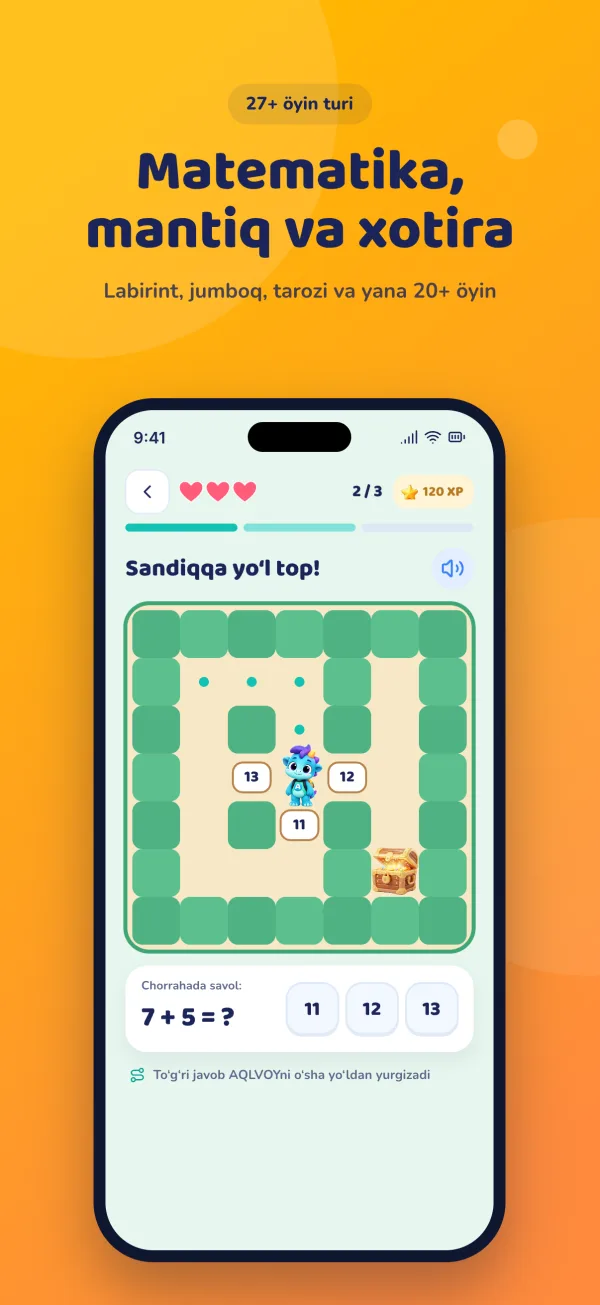
If you want short, fun practice for mental education, Donoland: Aqlvoy gives children aged 6–10 logic, maths and memory tasks with step-by-step hints.